
Safety
Workshop Safety Equipment Essentials
Personal protective equipment (PPE) in a home workshop context is often treated as optional. In professional environments across Czech Republic, EU Directive 89/686/EEC (now replaced by EU Regulation 2016/425 on PPE) makes specific categories of protection mandatory for identified hazards. While a home workshop falls outside the scope of occupational safety law, the same hazards — noise, airborne particles, ejected material, cuts and chemical exposure — are present regardless of whether the work is professional or domestic.
This article examines the five main categories of PPE relevant to home workshop use, with reference to the applicable European standards that appear on compliant products sold in Czech Republic.
Eye and Face Protection
Eye injuries in workshops occur faster than any other category. Grinding produces sparks and abrasive particles at velocities that exceed the blink reflex. The relevant standard is EN ISO 16321, which replaced the previous EN 166 standard for eye protection. When purchasing safety eyewear in Czech Republic, look for the CE mark alongside the standard number on the frame or lens.
Choosing Between Goggles and Face Shields
Safety spectacles (ochranné brýle) provide adequate protection for low-energy impact risk — drilling, sawing, sanding. They do not protect the sides of the eye area unless they are of the wraparound type. Goggles (uzavřené ochranné brýle) provide a sealed perimeter and are appropriate for grinding and use with angle grinders where particles travel in multiple directions. A full face shield (obličejový štít) rated to EN ISO 16321-2 is appropriate for angle grinding, turning and any operation producing hot sparks or liquid splash risk. A face shield does not replace eye protection — it is worn over safety glasses.
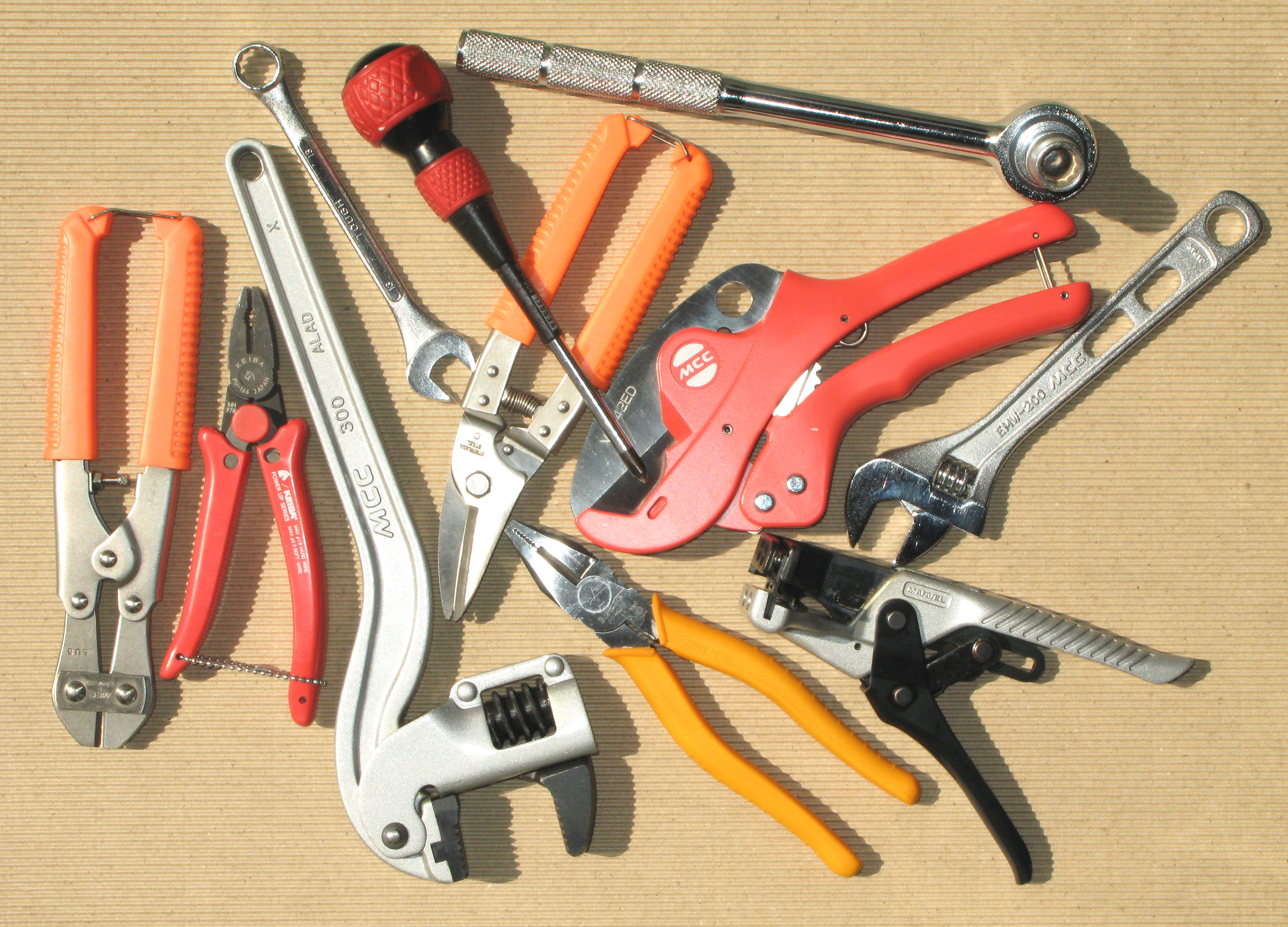
Even basic hand tools create hazards. A chisel slipping under force can produce a cut requiring medical attention. Gloves and eye protection remain relevant.
Hearing Protection
The Czech occupational exposure limit for noise (nařízení vlády č. 272/2011 Sb.) sets an action level at 80 dB(A) time-weighted average and a limit of 87 dB(A). These values apply to workplaces; however, they are a useful reference point for home workshop use. Common workshop operations exceed 80 dB: an angle grinder typically produces 95–100 dB(A), a circular saw 100–105 dB(A), and a jigsaw 88–94 dB(A).
EU Regulation 2016/425 classifies hearing protection in three categories by signal-to-noise ratio (SNR). For workshop use, earmuffs or earplugs with SNR 25–30 dB are appropriate for intermittent high-noise tasks. EN 352 is the standard covering earmuffs (352-1), earplugs (352-2) and level-dependent protection (352-7). Products sold in Czech Republic displaying the CE mark and EN 352 reference have been independently verified to the standard.
Practical Notes
- Foam earplugs rated SNR 35 dB are inexpensive and provide adequate attenuation for most workshop tasks if correctly inserted — the insertion technique matters significantly
- Earmuffs (mušlové chrániče sluchu) are more consistently worn correctly and are the practical choice for repeated short tasks
- Combined ear and head protection (integrated helmet with earmuffs) is useful when working at height or with a demolition hammer
Respiratory Protection
Wood dust from MDF, chipboard and particleboard contains formaldehyde-based resins and is classified as potentially carcinogenic at sustained exposure. Silica-containing dust from concrete, brick and tile grinding is classified as a confirmed cause of silicosis. The relevant standard in Czech Republic for respiratory protective equipment is EN 149, covering filtering half masks in three classes: FFP1, FFP2 and FFP3.
- FFP1 — minimum filtration efficiency 80%; suitable for low-toxicity dusts, course sanding of softwood
- FFP2 — minimum filtration efficiency 94%; appropriate for MDF, concrete dust, most workshop applications
- FFP3 — minimum filtration efficiency 99%; required when working with silica, asbestos or highly toxic substances
Dust masks without an EN 149 rating (paper masks, surgical masks) do not provide adequate protection against fine workshop particles. In Czech builder's merchants, FFP2 masks are stocked as standard alongside organic vapour cartridges for paint and solvent work. Vapour cartridges follow EN 14387 and are marked with a colour code: brown (organic vapour, A), grey (inorganic gas, B), yellow (acid gas, E).
Hand and Arm Protection
Gloves in a workshop context must be matched to the specific hazard. EN 388 covers mechanical protection (abrasion, cut, tear, puncture resistance), with each parameter rated on a 0–4 or 0–5 scale shown on the glove label. For general workshop handling — moving sheet material, handling rough timber — a level 3 cut resistance (EN 388 third digit) is appropriate.
Anti-vibration gloves conforming to EN ISO 10819 reduce the transmission of hand-arm vibration from power tools. Czech occupational guidelines set an 8-hour exposure action value for hand-arm vibration at 2.5 m/s²; an angle grinder used without gloves or damping measures transmits approximately 4–8 m/s², well above this threshold.
When Not to Wear Gloves
Gloves should not be worn when operating rotating machinery where entanglement is a risk — bench grinders, lathes and drill presses. If a glove catches on a rotating bit or grinding wheel, the rotational energy of the machine is transferred directly to the hand. In these contexts, bare hands are safer than gloved ones.
Foot Protection
Safety footwear in Czech Republic follows EN ISO 20345 for safety boots and EN ISO 20346 for protective boots. The standard defines protection categories: S1 (toecap + antistatic), S1P (toecap + antistatic + penetration resistance), S3 (toecap + antistatic + penetration resistance + water resistance). For general workshop use with sheet materials and heavy components, S1P is the practical minimum. S3 is appropriate when working in wet environments or on construction sites where nails and sharp debris are present on the floor.
Workshop Organisation and Passive Safety
Beyond PPE, the layout and organisation of a home workshop determines the frequency of hazardous situations. Common contributing factors to workshop accidents:
- Inadequate lighting — recommended minimum for workshop tasks is 500 lux at the work surface
- Loose cables and extension leads crossing the floor — a trip hazard during powered tool operation
- No designated storage for sharp tools — loose chisels and saw blades in a drawer are a cut hazard
- Absence of a fire extinguisher rated for class A and B fires (ordinary combustibles and flammable liquids)
- No first aid kit within the workshop — a 10-unit kit including wound closure strips and antiseptic covers most minor injuries
The Czech Fire Protection Act (zákon č. 133/1985 Sb.) does not impose specific requirements on home workshops in residential properties, but fire-safe storage of flammable materials (paints, solvents, wood finishes) in a metal cabinet with self-closing doors is standard practice in any workshop where ignition sources — angle grinders, soldering equipment — are used.
References: EU PPE Regulation 2016/425 · Czech standards body · BOZPinfo — Czech occupational safety information
Related

