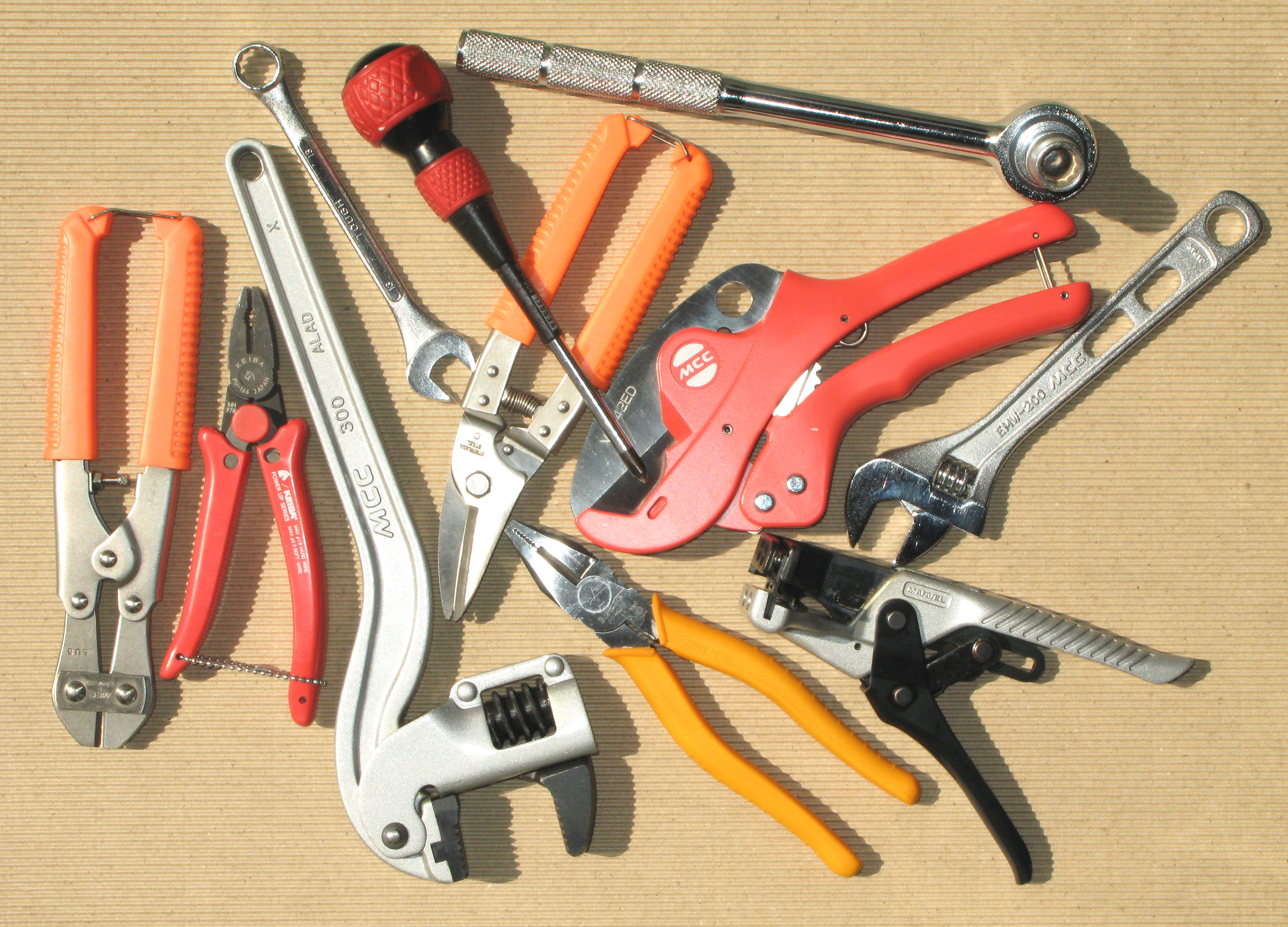
Power Tools
Power Tools Guide for the Home Workshop
Setting up a home workshop in the Czech Republic means navigating a mix of European safety directives, local voltage standards and a market supplied by both Czech and German tool manufacturers. This guide focuses on four categories of power tools that form the backbone of most renovation and woodworking work: drill presses, circular saws, angle grinders and jigsaws. Each section covers intended use, key specifications and what the Czech market typically offers.
Drill Presses and Combi Drills
A combi drill is almost always the first power tool purchased. Czech apartments and houses predominantly use concrete and aerated concrete (ytong) construction, which means a hammer drill function is not optional — it is a necessity. Standard masonry bits in sizes 6, 8 and 10 mm handle most anchoring tasks. When buying, look for a model with an adjustable torque collar (typically 16–24 settings on mid-range units) and electronic speed control.
Voltage matters for Czech users. The national grid supplies 230 V / 50 Hz, so European-market tools work without adapters. Cordless tools operating on 18 V Li-Ion platforms from Makita, Bosch or DeWalt represent the majority of mid-range purchases. Battery capacity measured in Ah (ampere-hours) determines run time: 2.0 Ah suits occasional use; 5.0 Ah or higher suits day-long renovation work.
A bench drill press offers far greater precision than a handheld drill for repeated holes at consistent depth.
Bench Drill Press vs. Handheld
For woodworking and metalworking requiring consistent hole depth and angle, a bench drill press is significantly more reliable than handheld drilling. Entry-level bench presses with 350–500 W motors handle timber up to 50 mm and steel up to 13 mm. The chuck size (typically 13 or 16 mm) determines the maximum bit shank diameter. Czech regulations require that the drill press is earthed (three-pin plug) and that the chuck guard is in place during operation.
Circular Saws
A circular saw is the most efficient tool for cutting sheet materials — plywood, OSB, MDF and chipboard — which are commonly used in Czech renovation projects for wall cladding, flooring and furniture construction. Blade diameter (typically 165 or 190 mm for hand-held models) determines maximum cutting depth. A 190 mm blade at 90° cuts to approximately 67 mm, sufficient for most timber sections.

Circular saw with a fine-tooth blade for sheet materials. Czech safety standard ČSN EN 62841-3-1 applies to this tool category.
Blade Selection
Blade tooth count determines cut quality. For ripping solid timber along the grain, 24-tooth blades are standard. For cross-cutting or cutting MDF (which generates fine dust), 60–80 tooth blades produce cleaner edges. Carbide-tipped blades last significantly longer than steel blades in regular use.
Safety Considerations
EU Machinery Directive 2006/42/EC applies to all circular saws sold in Czech Republic. The blade guard must be present and functional. An anti-kickback pawl or riving knife prevents the blade from binding in the kerf — particularly important when cutting long sheet panels without adequate support.
Angle Grinders
The angle grinder is the most dangerous common workshop tool, responsible for a disproportionate share of serious injuries. Despite that, it has uses that no other tool replicates efficiently: cutting through ceramic tile, steel pipe, concrete and mortar joints. In Czech construction, angle grinders with 115 or 125 mm discs are standard for tile cutting and surface preparation.
- Use cutting discs rated for the material — stone/concrete discs differ from metal-cutting discs
- Never use a cutting disc for grinding or vice versa
- Always attach the side handle and use both hands
- PPE minimum: face shield (not just goggles), gloves and hearing protection above 80 dB
- Check disc expiry date — old discs can shatter at high RPM
Jigsaws
The jigsaw handles curved cuts in timber, MDF, plastic and thin metal sheet — the task where a circular saw cannot be used. Orbital action settings (marked 0 to 3 on most European models) control how aggressively the blade moves forward during the cut. Setting 0 gives the cleanest cut in laminates; setting 3 removes material fastest in rough softwood.
For Czech users renovating older buildings with lath-and-plaster ceilings or wooden structural elements, a jigsaw with a long-stroke blade and wood-specific T-shank blades handles most cutting tasks during strip-out phases. Blade length should match material thickness — overly long blades flex and produce angled cuts.
Voltage, Extension Leads and Czech Electrical Standards
Czech sockets follow the Schuko standard (CEE 7/4 and 7/5). When using multiple power tools from a single circuit, total load must remain under the circuit breaker rating — typically 16 A (3,680 W) in residential buildings. Extension leads for power tools should be fully unrolled to prevent overheating; coiled leads under load can trip thermal cutouts or cause fire. Use leads rated for at least 2,500 W and with a minimum cross-section of 1.5 mm².
Where to Purchase in the Czech Republic
Major Czech hardware chains — Hornbach, OBI, Baumax (now Bauhaus) and the domestic chain Makro — stock broad ranges of power tools. Authorised service centres for Bosch, Makita and DeWalt operate in most regional cities. Purchasing from authorised dealers ensures that the warranty is valid and spare parts are accessible. Second-hand tools are widely available at Czech second-hand sites (Bazoš, Sbazar), but verifying the CE mark and functional blade guards before purchase is important.
References: EU Machinery Directive · ČSN standards via ÚNMZ
Related